


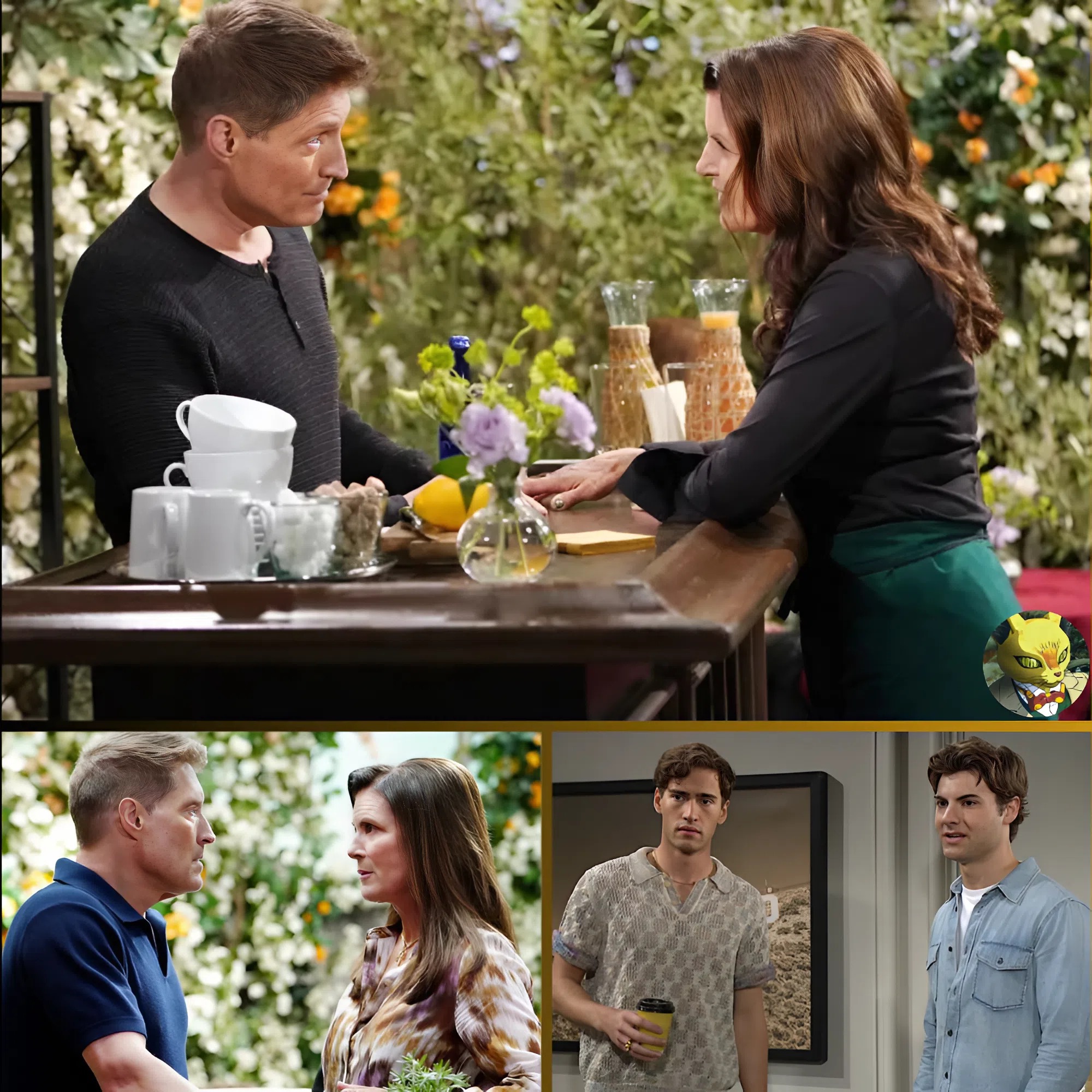
Wednesday’s (October 22) episode of The Bold and the Beautiful is packed with emotion, suspicion, and deception as both Deacon Sharpe and Deke face pivotal crossroads in their lives. One must decide whether to forgive a woman with a long trail of secrets, while the other begins to question a partner whose story just doesn’t add up.
Sheila’s Desperate Plea
After her shocking deception about Luna Nozawa’s (Lisa Yamada) survival, Sheila Carter (Kimberlin Brown) finds herself cornered — not by the law, but by love.
Her husband Deacon Sharpe (Sean Kanan), who once stood by her when no one else would, is struggling to process yet another betrayal. Sheila’s choice to keep the truth about Luna from him has fractured their already fragile marriage.

In Wednesday’s episode, Sheila makes a last-ditch plea to save her relationship, begging Deacon not to shut her out.
“Please, Deacon, don’t turn your back on me. I did it for you… for us,” she insists, her voice trembling with fear.
But Deacon, torn between his heart and his conscience, can barely meet her eyes. His sessions with Taylor Hayes (Rebecca Budig) have made him question whether loving Sheila means constantly excusing the chaos she brings into his life.
Deacon’s internal struggle reaches a breaking point as he admits that forgiveness may not be enough this time.
“I believed you changed,” he tells her. “But how many chances does one person get before they run out?”
The scene marks a major emotional turning point — and could spell the end for one of The Bold and the Beautiful’s most unpredictable couples.
Deke’s Discovery About Remy
Meanwhile, on the other side of Los Angeles, Deke (Harrison Cone) is navigating his own web of uncertainty.
After helping Remy (Christian Weissmann) quietly sneak into Forrester Creations with his design portfolio, Deke starts to notice that something doesn’t add up. Remy — who once trained Luna in marksmanship before her attempted shooting of Steffy — suddenly seems uneasy about having his name associated with the Forresters.
When Deke presses him for answers, Remy dodges the questions and insists that he doesn’t want “any attention.”
But Deke’s intuition kicks in. Why would someone so ambitious hide from one of the fashion industry’s most powerful families? Is Remy concealing a criminal past — or does he have a deeper connection to the chaos surrounding Luna and Sheila?
As Deke grows more suspicious, it’s clear that this subplot is just beginning to unravel.
Love, Lies, and Loyalty
Both Deacon and Deke find themselves at pivotal moments. For Deacon, it’s a choice between love and trust — between holding onto Sheila or finally setting himself free from her toxicity. For Deke, it’s the uneasy realisation that Remy’s charm might mask something dangerous.
With emotions running high and secrets tightening their grip on everyone involved, Wednesday’s episode sets the stage for another explosive chapter in the Bold and Beautiful saga.
The Most Breathtaking Automotive Designs: A 2025 Expert’s Top 10
For over a decade, I’ve navigated the intricate world where engineering prowess collides with artistic vision, a space where metal, glass, and rubber transcend mere utility to become rolling sculptures. In 2025, as the automotive landscape rapidly evolves with electric powertrains and autonomous innovations, the enduring appeal of truly beautiful design remains an unshakeable constant. While practicality often dictates our daily drives, it’s the profound aesthetic impact of certain vehicles that carves a permanent niche in our collective consciousness, transforming them into not just vehicles, but investment-grade classic cars and cherished automotive art investments.
The quest for the “most beautiful car” is, by its very nature, a deeply personal journey. Yet, after countless hours studying lines, proportions, and the nuanced interplay of form and function, a consensus often emerges around a select few. These are the machines that have defined eras, pushed boundaries, and continue to command attention, whether gracing a Concours d’Elegance lawn or simply capturing a bystander’s gaze. Drawing from my years immersed in premium vintage automobile market trends and timeless car design aesthetics, I’ve curated a list of ten exceptional vehicles that, even amidst the cutting-edge concepts of today, stand as undisputed masterpieces. This isn’t just about raw power or speed; it’s about the emotional resonance evoked by perfect design, the meticulous craftsmanship, and the sheer audacity of vision that makes a car truly unforgettable.
Here are my top 10 picks for the most beautiful cars of all time, each a testament to design excellence that continues to inspire in 2025:
Mazda RX-7 (FD)
Why it commands attention: The third-generation Mazda RX-7, specifically the FD chassis introduced in 1992, represents a zenith in Japanese sports car design, a flowing organic form that feels as if it were sculpted by nature rather than stamped from steel. Its sensuous curves, low slung profile, and distinctive pop-up headlights (a quintessential 90s design cue that has found new appreciation among JDM collector market enthusiasts) create a silhouette of undeniable grace and aggressive elegance. This wasn’t merely a car; it was a testament to Mazda’s “Kodo – Soul of Motion” design philosophy decades before the term was even coined, embodying dynamism even at a standstill.
In an era of increasingly complex and angular designs, the RX-7 FD’s simplicity is its strength. The lines are unburdened by unnecessary vents or creases, allowing the bodywork to flow seamlessly from front to rear. The double-bubble roof, the integrated spoiler, and the wide, planted stance all contribute to a cohesive visual narrative of pure, unadulterated performance. Underneath its breathtaking skin lay a revolutionary 1.3-liter twin-turbo rotary engine, a marvel of engineering that, despite its quirks, delivered an unparalleled driving experience. Today, the RX-7 FD holds its own in the performance classic valuation segment, with pristine manual examples fetching significant premiums, cementing its status as an icon of timeless sports car design and a powerful reminder of Mazda’s audacious engineering spirit.
Talbot-Lago T150-C-SS ‘Teardrop’
Why it commands attention: Stepping back to an era of bespoke coachbuilding, the 1937 Talbot-Lago T150-C-SS ‘Teardrop’ coupe, particularly those bodied by Figoni et Falaschi, is arguably the most exquisite example of pre-war automotive art. It is a rolling sculpture that transcends its function, an impossibly elegant blend of Art Deco extravagance and naturalistic fluidity. The nickname “Goutte d’Eau” (drop of water) perfectly describes its almost liquid form; every curve, every panel seems to have been poured into place, creating an aerodynamic and utterly captivating shape.
The Teardrop wasn’t just beautiful; it was avant-garde. Its pontoon fenders, flush-mounted headlights, and the dramatic, tapering rear section were revolutionary for its time, setting a benchmark for automotive aesthetics that few have matched since. The craftsmanship involved in hand-forming these aluminum bodies was immense, making each of the approximately 16 examples unique. Owning a Teardrop today means holding a piece of history, an ultra-luxury classic investment that frequently headlines Concours d’Elegance winners lists. Its value in the high-net-worth automotive assets market is astronomical, a testament to its unparalleled beauty and rarity, proving that true artistry commands an enduring premium.
Lancia Stratos
Why it commands attention: The 1973 Lancia Stratos is a defiant wedge of automotive aggression, a radical departure from conventional design that was born purely for the brutal world of rallying. Its design, penned by Marcello Gandini at Bertone, is uncompromisingly functional yet utterly captivating. The steeply raked windshield, the dramatic cut-off rear, and the singular, purposeful line that runs from nose to tail make it look less like a car and more like a space capsule designed for terra firma. It’s an exercise in minimalist design that achieves maximum impact, embodying purity of purpose in every angle.
The Stratos’s compact dimensions and mid-mounted Ferrari Dino V6 engine meant a notoriously cramped cabin, but these concessions were all in service of its primary goal: winning rallies. And win it did, dominating the World Rally Championship for three consecutive years. The road-going versions, built for homologation, are now highly sought after, with their exotic supercar market values reflecting their iconic status. In 2025, the Stratos remains an unassailable symbol of daring design and engineering, a raw, visceral machine that epitomizes iconic performance car design and stands as a testament to Lancia’s golden era of innovation.
Aston Martin DB9
Why it commands attention: The 2003 Aston Martin DB9 arrived as a definitive statement of refined power and understated elegance, seamlessly blending traditional British grand tourer aesthetics with contemporary sophistication. Designed by Henrik Fisker, the DB9’s proportions are simply exquisite: a long hood, a gracefully arching roofline, and a muscular yet fluid rear. Every curve feels deliberate, every surface perfectly tensioned, creating a visual harmony that is both powerful and serene. It possesses an inherent rightness that makes it instantly recognizable as an Aston Martin, yet distinctly modern for its time.
The DB9’s beauty lies in its subtle details and impeccable craftsmanship. The iconic Aston Martin grille, the distinctive side strakes, and the integrated rear spoiler all contribute to an aura of sophisticated aggression. Inside, the cabin was a masterclass in luxury, blending traditional materials with modern ergonomics. Powered by a glorious 5.9-liter V12, it offered both thrilling performance and effortless cruising capability. Even two decades later, the DB9 remains a benchmark for luxury grand tourer investment, its timeless British automotive aesthetics ensuring its continued appeal in the high-end classic car market. It embodies the very essence of what a quintessential grand tourer should be – a powerful, beautiful machine designed for epic journeys.
Fiat 500
Why it commands attention: While many lists of beautiful cars focus on exotics and supercars, the original 1957 Fiat 500 proves that beauty can be both democratic and utterly charming. This diminutive city car, designed by Dante Giacosa, is a masterclass in packaging and personality. Its rounded, friendly silhouette, cheerful headlights, and canvas sunroof exude an infectious sense of joy and optimism. It’s not about aggressive lines or brute force; it’s about accessible charm and brilliant functionality wrapped in an endearing package.
The Fiat 500’s significance extends beyond its aesthetics; it was a symbol of post-war Italian resurgence, providing affordable and reliable transportation to the masses. Its compact size made it ideal for navigating crowded European cities, while its simple, robust engineering ensured its longevity. The original 500’s enduring appeal is evident in its continuous presence in popular culture and the ongoing popularity of its modern iteration. In 2025, the original Fiat 500 has solidified its place in the microcar collectibles segment, appreciated for its historical significance, iconic design, and the sheer delight it brings. It stands as a testament that an accessible classic car can be just as aesthetically pleasing and historically important as any high-horsepower exotic.
BMW Z8
Why it commands attention: The 1998 BMW Z8 is a modern classic that beautifully reinterprets a legendary design. Conceived as a homage to the iconic BMW 507 of the 1950s, the Z8 manages to capture the spirit and elegance of its predecessor while forging its own distinct identity. Its long hood, short rear deck, and classic roadster proportions create a powerful yet graceful stance. The design team, led by Henrik Fisker, meticulously crafted a car that is both retro-inspired and futuristic, a rare feat in automotive design.
The Z8’s beauty lies in its exquisite detailing and balanced proportions. The shark-nose grille, the subtle side vents that echo the 507, and the elegant integration of technology (like the neon taillights) all contribute to a sense of sophisticated restraint. Underneath, it shared its glorious 4.9-liter V8 engine with the E39 M5, providing ample power to match its stunning looks. The limited production run and bespoke construction have ensured its exclusivity. In today’s modern classic investment market, the Z8 is highly coveted, a stunning example of Bavarian motor heritage that has appreciated significantly. It’s a perfect blend of past and present, a car that looks sublime from any angle and offers a driving experience to match its visual drama.
Peugeot 406 Coupe
Why it commands attention: The 1996 Peugeot 406 Coupe, styled by the legendary Italian design house Pininfarina, is a masterclass in understated elegance and accessible beauty. It defies its humble origins to present a silhouette that could easily be mistaken for a much more exclusive, higher-priced grand tourer. The clean, flowing lines, the perfectly sculpted flanks, and the long, graceful hood evoke a sense of serene confidence and timeless sophistication. This car proved that everyday brands could achieve extraordinary aesthetic heights when paired with the right design talent.
Pininfarina’s touch is evident in every detail, from the subtly integrated headlights to the perfectly proportioned glasshouse and the elegant rear end. It’s a design free from unnecessary embellishment, allowing the pure form to speak for itself. The rumor, though debunked, that it was based on a rejected entry-level Ferrari design speaks volumes about its perceived quality. While many of the cars on this list command stratospheric prices, the 406 Coupe offers an opportunity for affordable classic coupes investment, making genuine Italian design influence attainable. Its enduring appeal to enthusiasts solidifies its place as a future classic potential, a testament to French automotive class infused with Italian flair.
Alfa Romeo 33 Stradale
Why it commands attention: The 1967 Alfa Romeo 33 Stradale is not just beautiful; it is an epochal work of automotive sculpture, widely considered one of the most stunning cars ever conceived. Born from the Tipo 33 racing program, this road-legal masterpiece, designed by Franco Scaglione, is an astonishing blend of sensual curves, aggressive stance, and pioneering features. Its breathtaking form is a pure expression of performance and aerodynamic efficiency, yet rendered with an artistic flair that borders on the divine.
The Stradale’s distinctive butterfly doors, the ultra-low profile, and the incredibly complex, hand-formed bodywork make it utterly unique. Every curve, every vent, every detail feels perfectly placed to create a harmonious and dynamic whole. With only 18 examples ever built, it was the most expensive production car in the world at its launch. Its rarity and unparalleled beauty place it firmly in the category of investment-grade supercar and rarest classic cars, with values soaring into the tens of millions. The mid-mounted 2.0-liter V8 engine, directly derived from Alfa’s racing pedigree, offered intoxicating performance to match its visual drama. The 33 Stradale is more than a car; it is an undisputed automotive design masterpiece, a benchmark against which all other supercars are measured, both then and now.
Citroën DS
Why it commands attention: The 1955 Citroën DS (“Déesse,” meaning goddess in French) was a thunderbolt of innovation and design that instantly redefined automotive engineering and aesthetics. Designed by Flaminio Bertoni and André Lefèbvre, the DS looked like nothing else on the road, with its futuristic, aerodynamic body, integrated headlights, and fully enclosed rear wheels. It wasn’t just beautiful; it was a vision of the future, a rolling sculpture that challenged every convention.
Beyond its striking looks, the DS was an engineering marvel, featuring groundbreaking innovations like hydropneumatic suspension (offering an unparalleled ride quality), power steering, and disc brakes. Its ability to maintain a constant ride height and adapt to road conditions was revolutionary. The interior was equally avant-garde, with a single-spoke steering wheel and exquisitely styled controls. The DS was practical family transport elevated to an art form, a symbol of French ingenuity and sophistication. Even in 2025, the DS remains a powerful force in design icon appreciation, a car whose influence is still felt in modern vehicle design. Its innovative automotive engineering and distinctive hydropneumatic suspension heritage make it an enduring favorite for collectors and enthusiasts worldwide.
Chevrolet Corvette (C2)
Why it commands attention: The 1963-1967 Chevrolet Corvette C2, universally known as the “Sting Ray,” is the quintessential American sports car, a powerful statement of bold design and performance. Inspired by both nature (the stingray) and high-concept European designs like the Bugatti Atlantique, the C2’s lines are taut, muscular, and undeniably aggressive. Its iconic split rear window (for 1963 only), the distinctive “coke-bottle” profile, and the sharp, defined creases create a sense of speed and raw power, even at a standstill.
Designed by a team led by Larry Shinoda and Bill Mitchell, the C2 represented a dramatic leap forward for the Corvette. The concealed headlights, the deeply scalloped fenders, and the purposeful stance all contributed to its formidable presence. With a range of powerful V8 engines, from the “small block” to the legendary “big block” 427, the Sting Ray delivered on its visual promise of blistering performance. Its fiberglass body allowed for complex curves that were difficult to achieve with steel, making it both lightweight and distinctively styled. In 2025, the C2 Corvette is a pillar of the American muscle car investment market, with pristine examples of the split-window and big-block models commanding top dollar. It’s an undisputed icon, embodying the very best of American classic Corvette values and a testament to enduring fiberglass body automotive legend.
The Unending Pursuit of Automotive Beauty
As we navigate the ever-changing automotive landscape of 2025, these ten vehicles serve as a timeless reminder that true design excellence transcends eras, technologies, and trends. They are more than just modes of transportation; they are cultural artifacts, high-net-worth automotive assets, and powerful expressions of human creativity. Each car on this list represents a pinnacle of design, whether through audacious innovation, sculptural grace, or democratic charm.
Their beauty isn’t merely skin deep; it’s a reflection of the passion, ingenuity, and artistry poured into their creation. For those of us who appreciate the delicate balance between form and function, these machines will continue to captivate, inspire, and appreciate for generations to come. They stand as enduring proof that a vehicle can be both a powerful machine and a breathtaking work of art, deserving of admiration and preservation.
Which of these iconic vehicle designs resonates most deeply with you? Or is there another timeless beauty you believe deserves a place among the elite? Join the conversation and explore the fascinating world of collector car market analysis and automotive design innovation with us. Your next journey into automotive excellence awaits!